Mount Rainier vs Crater Lake: which park should you visit?
One volcano still climbing skyward, another collapsed and filled with the bluest water in America
Mount Rainier and Crater Lake both center on volcanoes, but they tell opposite stories. Rainier is still building itself with glaciers and altitude, a mountain you see from miles away. Crater Lake collapsed inward and filled with water so blue it looks like a trick of the light. One draws crowds from Seattle and beyond, the other remains criminally overlooked despite being deeper than any lake in the country.
Both parks peak in July, but June offers a different calculus. At Rainier, wildflower season is just starting and Paradise lives up to its name. At Crater Lake, you'll still find snow on the rim and some roads closed, but the lake itself is open and emptier than it will be all summer.
Mount Rainier National Park
More glaciers than any Lower 48 peak / Ninety minutes from Seattle
Rainier dominates the horizon from Tacoma to Olympia, but the mountain reveals itself slowly as you drive into the park. The forests are thick enough to block the view until you round a corner on the Paradise road and suddenly the whole south face fills your windshield. Paradise sits at over 5,400 feet and gets buried under more snow than any regularly measured location in the country. By June, the parking lot is clear but snow still blankets the subalpine meadows, and wildflowers push through the melt line in waves that last through August.
Paradise in June means lupine and avalanche lilies turning entire hillsides purple and white while snowfields linger in the shade.

The park sees more visitors than the population of Philadelphia each year, and most of them funnel through Paradise and Sunrise. You'll share the trails with families, tour groups, and plenty of people who drove up from the city for the day. The Skyline Trail loop climbs through meadows above the Paradise Inn and offers views of the Nisqually Glacier, but expect company on summer weekends. For more solitude, head to the Grove of the Patriarchs on the park's east side or drive the northern route to Sunrise, where the crowds thin and the trails push into alpine country. Rainier spawns five major rivers from its glaciers, and you'll cross at least one on any hike longer than a mile.
Crater Lake National Park
Deepest lake in America / Far fewer visitors than it deserves
Crater Lake draws a fraction of Rainier's crowds despite being one of the most visually arresting landscapes in the West. The rim sits above 7,000 feet, and the lake drops nearly 2,000 feet below that. In June, the Rim Road is usually still closed on the north side, with snow piled higher than car roofs in places. The south entrance stays open year-round, and you can drive to Rim Village and several overlooks even when the full loop isn't passable. The lake itself is always visible, and the color doesn't change with the season. Scientists use Crater Lake water as a purity baseline because almost nothing lives in it and no rivers feed it.
The first time you see Crater Lake, your brain struggles to process the blue as real water rather than Photoshop.
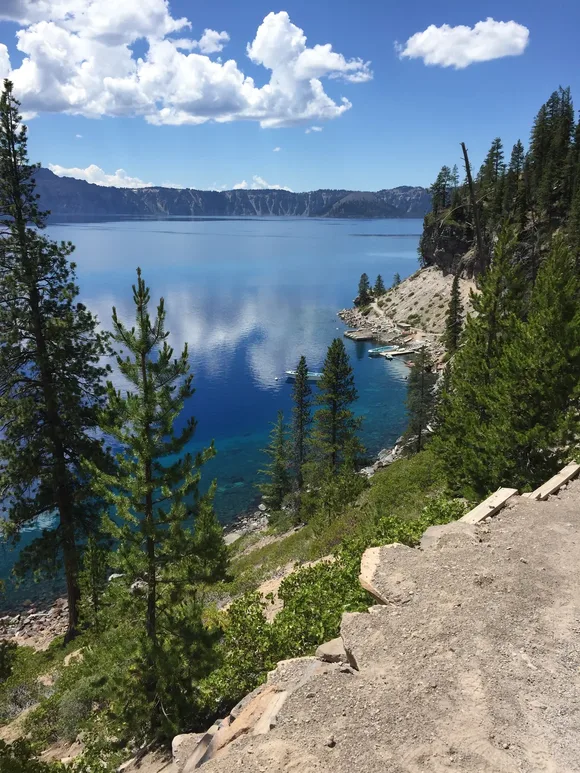
Wizard Island rises from the lake like a miniature volcano inside the caldera, which is exactly what it is. You can hike down to the shore on the Cleetwood Cove Trail, the only legal lake access in the park. It's just over a mile each way but drops 700 feet, and you'll climb every foot of it on the way back up. The boat tours to Wizard Island run from late June through September when conditions allow, but in early June you're mostly limited to rim viewpoints and snowshoe routes. That's not a problem. The Watchman Trail climbs to a fire lookout with views across the entire caldera, and Discovery Point offers the classic postcard angle without much effort.
Getting There
Mount Rainier sits close enough to Seattle that it functions as the city's backyard mountain. You can leave SeaTac airport and reach the Nisqually entrance in under two hours if traffic cooperates. Crater Lake requires more commitment. The nearest major airport is in Redmond, almost four hours away, and the south entrance sits nearly two hours from Medford on mountain roads. Crater Lake's remoteness is part of why it stays quiet. Rainier's proximity is why it doesn't.
The Hiking
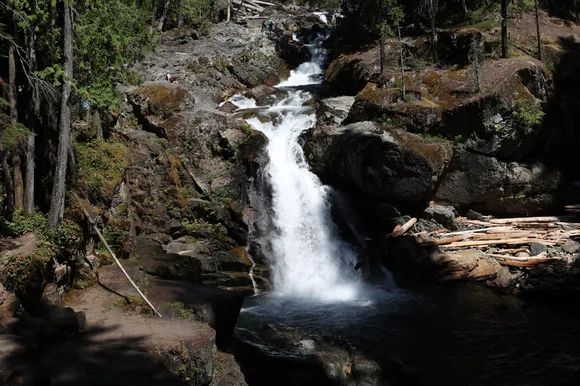
Rainier offers more than twice the trail mileage of Crater Lake, with routes ranging from flat forest loops to glacier crossings that require ropes and ice axes. Paradise and Sunrise provide the most accessible alpine hiking, with trails like Skyline and Burroughs Mountain pushing into terrain above the trees. Comet Falls drops nearly 320 feet and makes for a satisfying half-day hike through old growth forest.
Crater Lake's trail network is smaller but includes the full Rim Trail, a 33-mile loop that circles the caldera with constant lake views. Most people don't hike the whole thing, opting instead for shorter sections like Watchman or Garfield Peak. The Cleetwood Cove Trail is the only way to touch the water, and the steep descent keeps casual visitors on the rim. Both parks offer excellent backpacking, though Rainier's Wonderland Trail gets far more attention than Crater Lake's backcountry routes.
Crowds and Timing
Rainier feels crowded in the way popular parks do. Paradise parking fills by mid-morning, trailheads require early starts, and you'll share viewpoints with tour buses. The park's size absorbs some of the pressure, but expect company on any trail within a mile of the main roads. Crater Lake spreads its smaller visitor count across a larger geographic area, and even in peak July you can find empty overlooks along the rim. June at Rainier means wildflowers and accessible trails. June at Crater Lake means limited access but better solitude and snow that makes the landscape feel more dramatic.
The Verdict
Choose Mount Rainier if you want accessible alpine terrain, extensive trail options, and don't mind sharing the experience with crowds. The wildflower displays alone justify a June visit, and the mountain's scale makes every viewpoint feel earned. Choose Crater Lake if you value solitude and want one of the most underrated park experiences in the country. The lake is worth the drive, and the smaller crowds mean you'll actually have space to appreciate it. Both parks reward early starts and midweek visits, but Crater Lake offers something Rainier can't: the chance to see a major national park landmark without fighting for a parking spot.