The 8 Most Underrated National Parks
Eight national parks that see fewer visitors in a year than Yosemite gets in a weekend, from Arctic sand dunes to coral reefs
The National Park Service doesn't advertise failure, but that's exactly what these eight parks represent: places so remote, so difficult to reach, or so misunderstood that they've remained almost invisible despite protection status. While Yellowstone and Yosemite absorb crowds that rival small cities, these parks see fewer visitors in a year than Zion gets in a week. That invisibility is precisely what makes them worth seeking out.
We ranked all 63 national parks by visitor numbers relative to their size and accessibility, then filtered for parks that punch far below their weight. What emerged is a list dominated by Alaska's wildest corners, plus a few surprises closer to home. If you're planning for April, several of these parks hit their stride just as spring arrives.
Gates of the Arctic National Park & Preserve
Larger than Switzerland with no trails or roads / Fewer visitors than a minor league baseball game
The northernmost national park in the United States sees fewer people annually than pass through Grand Canyon in a single afternoon. There are no maintained trails because the Park Service decided early on that infrastructure would compromise what makes this place extraordinary: the complete absence of human alteration. You navigate by topographic map, river corridor, or animal trail through territory where grizzlies and caribou outnumber people by orders of magnitude.
Gates of the Arctic doesn't have a single maintained trail because the wilderness itself is the destination.
The Brooks Range cuts through the center of the park, a wall of granite peaks that guided Inupiat hunters for millennia and still frames one of North America's last intact ecosystems. Most visitors fly into Bettles or Coldfoot, then charter a floatplane to a drop-off lake. From there you're on your own with bear canister, satellite beacon, and whatever off-trail navigation skills you brought. July offers the mildest weather and near-continuous daylight, though mosquitoes arrive in clouds thick enough to drive you back to the plane.
North Cascades National Park
More glaciers than any park outside Alaska / Three hours from Seattle but nearly empty
Three hundred glaciers carve through jagged peaks that rise straight from temperate rainforest, creating terrain so rugged that State Route 20 took decades to punch through. The park sits closer to Seattle than Mount Rainier, yet it draws a fraction of the visitors. Most people glimpse it from the North Cascades Highway, pull over at Diablo Lake for photos of that impossible turquoise water, then drive on without realizing they've barely scratched what's here.
North Cascades rewards those who leave the scenic highway behind and push into valleys where glaciers still advance and retreat with the seasons.
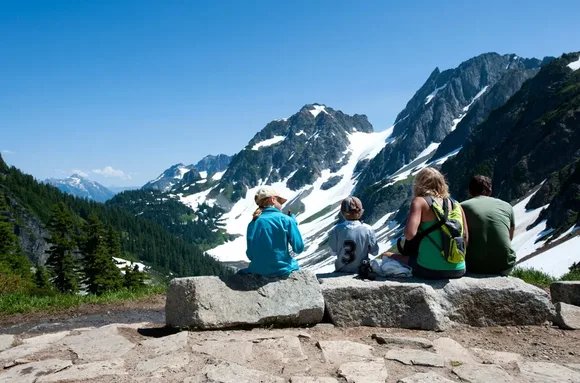
Cascade Pass Trail delivers alpine views after less than four miles of moderate climbing, making it one of the most accessible high-country routes in the park. The trail ends at a saddle where you can watch ice calve off Johannesburg Mountain if you're patient. Families gravitate toward Rainy Lake Loop, a paved path that dead-ends at a waterfall without gaining serious elevation. August brings the most reliable weather, though wildflowers peak in late July and the larch turn gold in late September.
Isle Royale National Park
Lake Superior island with no cars or roads / Fewer annual visitors than a single day at Acadia
You reach Isle Royale by ferry or seaplane, and once you arrive, you're committed. The island sits far enough offshore that cell service is a memory and weather can strand you for days. That remoteness has preserved one of North America's most studied predator-prey ecosystems: wolves and moose locked in a dance that biologists have tracked for six decades. The park closes entirely from November through mid-April when Lake Superior freezes and ferry service stops.
Isle Royale is less a day trip destination than a commitment to wilderness on an island where you measure distance in paddle strokes and boot miles.
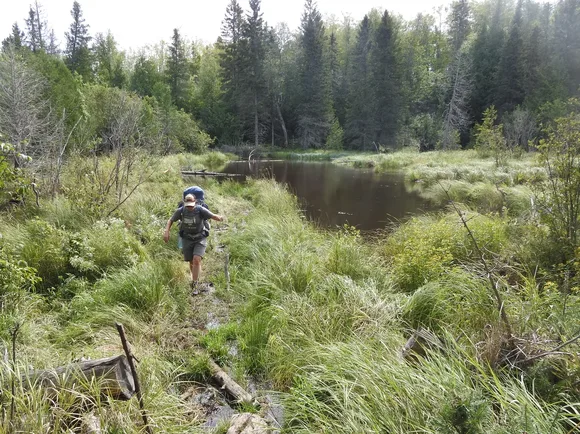
Backpackers tackle the Greenstone Ridge Trail, a spine route that runs the length of the island through boreal forest and past inland lakes. Kayakers work the shoreline, threading between smaller islands and camping on rocky beaches where moose wade into the shallows at dawn. Rock Harbor serves as the main hub with a lodge and visitor center, while Windigo on the western end sees fewer people but offers direct ferry access from Minnesota. July and August bring the warmest weather and peak blueberry season, though black flies can be aggressive until mid-July.
National Park of American Samoa
The only park south of the equator / Rainforest and coral reef across three volcanic islands
American Samoa sits so far from the mainland that most Americans couldn't find it on a map, which explains why this park sees fewer visitors than nearly every other unit in the system. You fly into Pago Pago, then coordinate boat or air transport to Ofu and Tau if you want to see the park's outer reaches. The islands protect both reef ecosystems and traditional Samoan villages where locals still practice fa'a Samoa, the Samoan way of life that predates Western contact.
American Samoa defies the national park template by weaving traditional villages directly into protected lands, creating a living cultural landscape instead of a preserved museum.
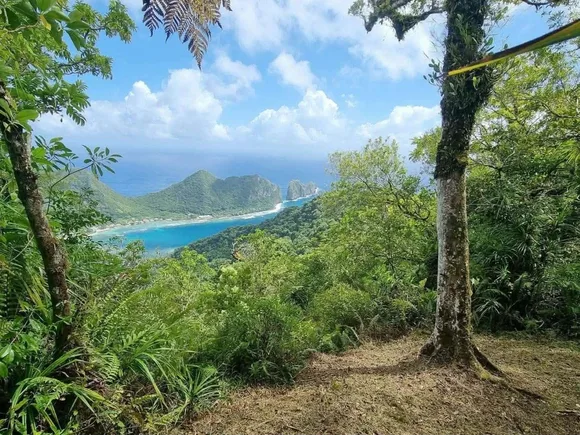
Ofu Beach consistently ranks among the world's best tropical beaches, with coral reef so close to shore you can snorkel straight from the sand. Mount Lata Trail climbs through rainforest thick enough to block the sun, emerging at a summit where you can see neighboring islands on clear days. April sits at the tail end of the rainy season, bringing warm water and good visibility before the peak summer heat. There are no campgrounds, so you'll stay with village families through the park's homestay program or book one of the limited guesthouses.
Katmai National Park & Preserve
North America's largest protected brown bear population / Brooks Falls in July is standing room only with bears
Katmai hosts more than twice as many brown bears as people see in an average year, which tells you everything about the park's priorities. Brooks Falls serves as the main attraction: a six-foot cascade where bears congregate every summer to catch salmon mid-leap. The Park Service built elevated platforms to keep humans safe while bears fish directly below, creating wildlife viewing that feels more like a nature documentary than a park visit.
Brooks Falls turns bear watching into a spectator sport, with designated platforms where you're close enough to hear salmon bones crunch in a grizzly's jaw.
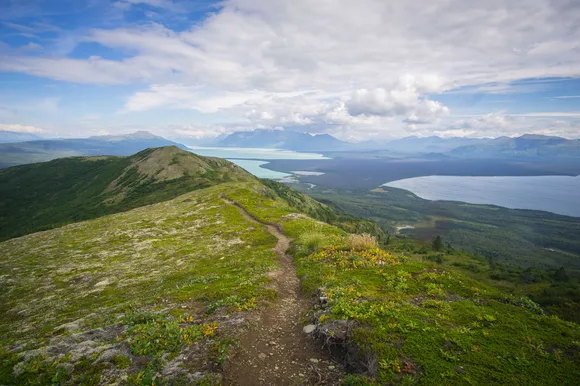
Beyond Brooks Camp, the Valley of Ten Thousand Smokes spreads across ash-covered terrain from the 1912 Novarupta eruption, one of the largest volcanic events of the 20th century. Bus tours from Brooks Camp drop visitors at the valley overlook, where you can hike into the ash flow if you've got water and navigation skills. June brings the first salmon runs and smaller crowds than July's peak bear season. April sits outside the main visitor window, but the park technically stays open year-round for those willing to deal with winter logistics and expensive charter flights.
Kobuk Valley National Park
Sand dunes the size of a small city in the Arctic / Carved by ice age winds still pushing them north
The Great Kobuk Sand Dunes rise from tundra 30 miles above the Arctic Circle, a surreal landscape that looks like it was dropped from the Sahara into Alaska. The dunes formed during the last ice age when glacial winds ground rock into sand, and they're still active today, migrating slowly across permafrost. There are no roads to Kobuk Valley, no visitor center, and no designated campgrounds. You fly in or paddle the Kobuk River, then navigate by your own judgment.
Walking the Great Kobuk Sand Dunes in July feels like standing on two planets at once: desert underfoot, tundra stretching to every horizon.
The Western Arctic caribou herd migrates through the park twice annually, crossing the Kobuk River at Onion Portage in one of the continent's oldest wildlife corridors. Archaeological sites along the river date back thousands of years, marking places where Inupiaq hunters intercepted the herds. July and August offer the warmest weather and longest days, though you'll still need layers for morning cold. Most visitors base out of Kotzebue and arrange floatplane drops, but paddlers sometimes run the Kobuk River from headwaters to coast.
Lake Clark National Park & Preserve
Two active volcanoes and a 42-mile turquoise lake / Closer to Anchorage than Denali but sees a fraction of visitors
Lake Clark protects terrain so varied that it spans three climate zones from coast to interior, with active volcanoes smoking over glacial lakes and brown bears fishing salmon streams you can only reach by floatplane. The park sits directly across Cook Inlet from Anchorage, visible from the city on clear days, yet it remains one of the least visited units in the system. There's one official campground and a handful of designated backcountry sites, but most of the park is true wilderness where you make your own camp.
Lake Clark's turquoise water reflects Mount Redoubt so perfectly that you can watch the volcano smoke in both sky and surface.
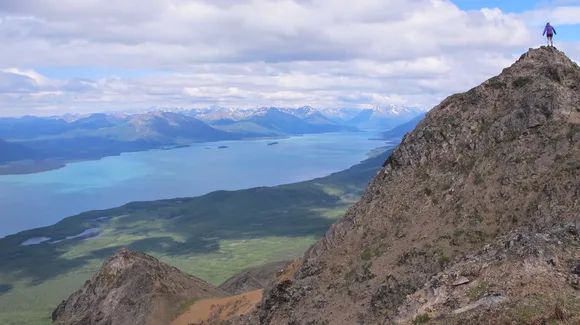
Twin Lakes serves as a popular drop point for backpackers heading into the interior, while Port Alsworth on Lake Clark's shore functions as the de facto gateway with lodges and air services. Floatplanes land directly on the lake, taxiing to gravel beaches where you unload and watch your ride disappear over the peaks. June and July offer the longest days and most stable weather, though the park stays technically open year-round for those equipped for winter. April sits at the tail end of winter, with snow still deep in the high country and river ice just beginning to break.
Dry Tortugas National Park
Coral islands 70 miles west of Key West / Anchored by a six-sided fort that took 30 years to build and was never finished
Fort Jefferson dominates Garden Key, a massive brick structure that rises from sand and coral in the middle of the Gulf of Mexico. The fort held Civil War prisoners and later served as a quarantine station, but it never fired a shot in combat. Today it provides the most surreal backdrop for snorkeling in the national park system: 16 million bricks forming hexagonal walls while sea turtles glide past and reef fish dart through seagrass beds just offshore.
Dry Tortugas delivers the strange satisfaction of snorkeling beside a fortress that took three decades to build and became obsolete before completion.
You reach the park by ferry from Key West or seaplane if you've got the budget. The ferry takes over two hours each way, limiting your time on the island to about four hours before the return trip. Campers can stay overnight in one of eight primitive sites right on the beach, waking to sunrise over the fort and having the snorkel reefs to themselves before day visitors arrive. April sits in the shoulder season with good weather and smaller crowds than peak winter months. The water stays warm enough for swimming year-round, though summer heat can be oppressive with zero shade outside the fort walls.
Planning Your Visit: Most of these parks require serious advance planning, from air charters in Alaska to ferry reservations in Florida. Check our wilderness backpacking and wildlife viewing guides for specific gear recommendations and permit requirements.