The Florida National Parks Road Trip
Florida's three national parks see fewer crowds than one Yellowstone weekend but deliver world-class coral reefs and wildlife viewing
Florida's three national parks have one thing in common: almost nobody visits them. They draw fewer people combined than Yellowstone sees in a single week, despite sitting within an hour of Miami or a seaplane ride from Key West. The second thing they share is more surprising: all three are water parks in the truest sense. You won't find towering peaks or red rock arches here. You'll find coral reefs, mangrove tunnels, and sawgrass marshes that stretch to the horizon.
April sits at the tail end of Florida's dry season, when temperatures hover in the low 80s and the summer mosquito hordes haven't yet arrived. The water is warm enough for snorkeling without a wetsuit, and the wildlife viewing rivals anywhere in the lower 48. If you can handle the logistics of reaching parks accessible only by boat or through vast wetlands, you'll find some of the emptiest landscapes in the national park system.
Biscayne National Park
America's only living coral reef system / Closer to Miami than the airport
Ninety-five percent of Biscayne is underwater, which explains why most people have never heard of it. The park protects a section of coral reef that runs along the edge of the continental shelf, visible from the glass-bottom boat tours that leave from the Dante Fascell Visitor Center. But the boat tours only show you the reef. To actually experience Biscayne, you need to get in the water or paddle a kayak through the mangrove coastline that shelters the shallow bay.
You can see Miami's high-rises from Elliott Key's beach, but the only sounds are waves and ospreys.
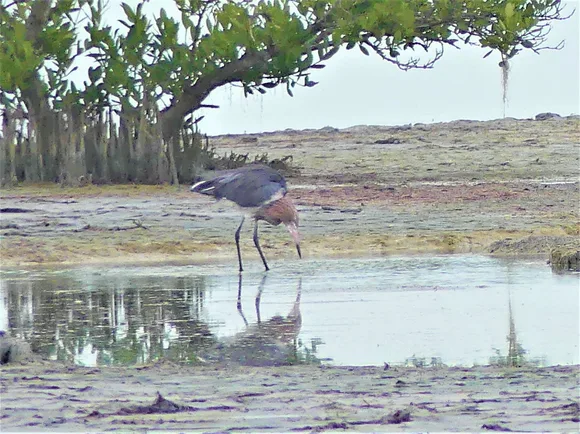
Elliott Key and Boca Chita Key anchor the park's island chain, both accessible by private boat or park concessioner. Elliott Key offers a two-mile trail through hardwood hammock forest where you'll likely see more land crabs than people. Boca Chita draws more visitors for its ornamental lighthouse and protected harbor, but even on busy weekends the crowds stay contained. The real draw is the snorkeling: you can swim over brain coral the size of compact cars and spot parrotfish, angelfish, and the occasional nurse shark cruising the reef edge. Rangers lead snorkel tours that teach you to identify coral species and explain why this reef system matters more than most people realize.
Dry Tortugas National Park
70 miles west of Key West / Fewer visitors than your hometown
Fort Jefferson squats on Garden Key like a brick fortress that someone forgot to finish. The hexagonal structure took 30 years to build, used 16 million bricks, and never saw combat. It served as a prison during and after the Civil War, most famously holding Dr. Samuel Mudd, who set John Wilkes Booth's broken leg. Now it anchors a park that most people visit for the water, not the history. The ferry from Key West takes two and a half hours, or you can seaplane in and land in the protected harbor inside the fort's walls.
The moat around Fort Jefferson holds clearer water than most swimming pools, with better fish.
Garden Key's beach curves along the fort's southern edge, and the snorkeling starts 50 yards offshore. The coral reef here rivals Biscayne but sees a fraction of the visitors. You'll paddle over elkhorn coral formations and schools of yellowtail snapper dense enough to block your view. The park's eight campsites sit on the fort's parade ground, exposed to wind but protected by thick brick walls that glow orange at sunset. Bush Key, connected to Garden Key by a sandbar, closes from January through September for nesting terns and frigatebirds, but when it opens you can walk across and have an entire island to yourself. Kids love the fort's exploration: dark corridors, spiral staircases, and cannons pointed at nothing but horizon.
Everglades National Park
Larger than Delaware / America's best alligator viewing
The Everglades aren't a swamp, despite what most people think. This is a river moving so slowly you can't see it flow, spreading across sawgrass prairies that stretch 60 miles from Lake Okeechobee to Florida Bay. The river measures 60 miles wide in places and only six inches deep, creating a landscape that looks like endless grassland until you step into it. Most visitors enter through the Ernest Coe entrance near Homestead and drive the 38-mile road to Flamingo, stopping at boardwalk trails that offer glimpses into this strange ecosystem.
Anhinga Trail delivers more wildlife in half a mile than most parks offer in a week.
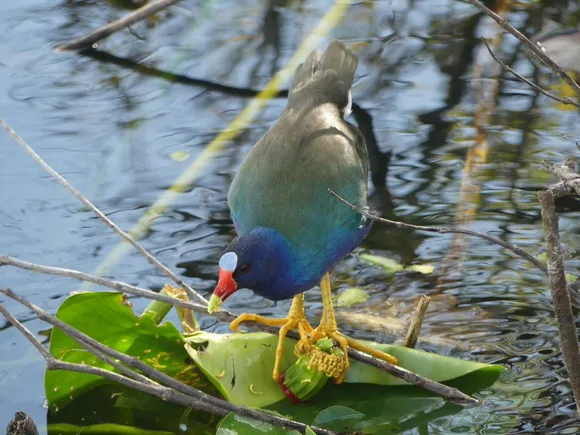
Start at Anhinga Trail, where alligators sun themselves three feet from the boardwalk and anhingas spear fish in the shallow pools below. Come early, before 9 AM, when the light hits the water and the birds are actively feeding. Purple gallinules step across lily pads on yellow feet the size of your hand, and great blue herons stalk the edges looking for prey. The half-mile loop takes 20 minutes if you walk straight through, but you'll want an hour to watch the show. From there, drive to Shark Valley on the park's northern edge, where a 15-mile paved loop cuts through the heart of the sawgrass prairie. You can bike it, tram it, or walk sections, but the real attraction is the wildlife density: alligators line the canal like logs, and wading birds congregate wherever water pools along the trail.
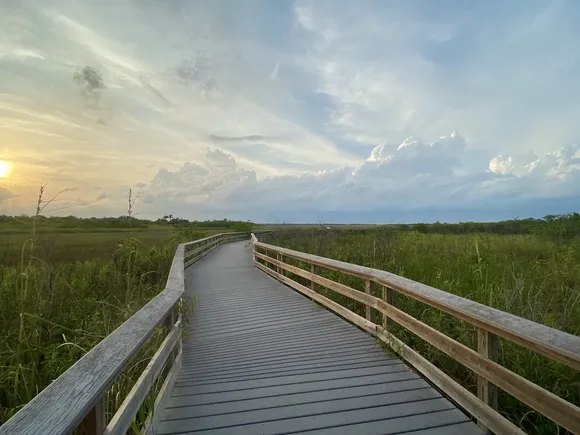
The Ten Thousand Islands coastline offers a completely different Everglades experience. Launch a kayak from the Gulf Coast Visitor Center and paddle through mangrove tunnels where the only sounds are your paddle dripping and ospreys calling overhead. The 99-mile Wilderness Waterway connects Everglades City to Flamingo, but you can sample it on day trips through channels where dolphins surface and manatees graze on seagrass beds. Rangers lead regular kayak tours that teach you to read the tides and identify the three types of mangroves that create this coastal maze.