The Midwest national parks road trip
Six Midwest parks offering space, solitude, and landscapes most people assume require cross-country flights
The Midwest doesn't show up on the bucket-list circuit, and that's exactly why August is the right time to visit. While Yellowstone chokes on tour buses and Zion turns hikers away at trailheads, the six national parks scattered across Ohio, Indiana, Michigan, Minnesota, North Dakota, and South Dakota offer something radical: space to breathe. This route strings together everything from Lake Superior wilderness to badlands painted in layers of geologic time, with barely a permit lottery in sight.
You won't find towering granite walls or thousand-foot waterfalls here. What you will find is variety that spans ecosystems most people assume require cross-country flights: boreal forest islands, the highest plant biodiversity in the park system, and eroded buttes that turned a grieving rancher into the conservation president. Start in Cleveland and you could hit all six parks in ten days, or linger at Isle Royale for a week and skip the rest entirely.
Cuyahoga Valley National Park
More visitors than most Western icons / 20-mile towpath threading through Ohio
Cuyahoga Valley sits between Cleveland and Akron, drawing crowds that would overwhelm a more remote park, but the sheer length of the Towpath Trail absorbs them. The historic canal route runs flat and easy for 20 miles along the Cuyahoga River, popular with cyclists and families pushing strollers. You'll share the main corridor with locals treating it like their backyard greenway, because that's exactly what it is.
Brandywine Falls drops 65 feet into a mossy gorge where wooden boardwalks bring you close enough to feel the mist.
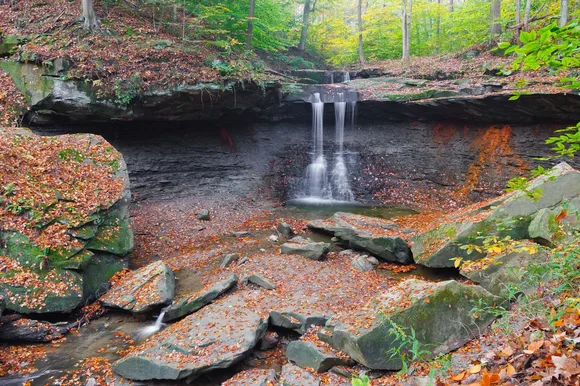
The Ledges Trail offers something different: a 3.5-mile loop through hemlock groves and past glacial rock formations that create narrow slot passages and overhangs. Kids love squeezing through the crevices, and the trail stays cool even in August heat. September brings better color and fewer weekend crowds, but August works if you start early and avoid the Brandywine Falls parking lot after 10 AM on Saturdays.
Indiana Dunes National Park
15 miles of Lake Michigan shore / More plant species than any other park
Indiana Dunes packs more biodiversity into 25 square miles than parks hundreds of times its size: over 1,100 plant species thriving in the collision of dune, wetland, prairie, and forest ecosystems. The park sits in Chicago's backyard, which means August weekends turn West Beach into a shoulder-to-shoulder scene. If you're coming for solitude, this isn't your park. If you're coming for a legitimate Great Lakes beach experience within 30 miles of a major city, it delivers.
Mount Jackson climbs 176 feet through oak savanna and blowout dunes, then drops you onto a Lake Michigan overlook that erases every assumption about Indiana.
The Dunes Succession Trail teaches you to read landscape history in real time: bare sand to cottonwood to oak forest, all within three miles. Kids can run the beach, hunt for Petoskey stones, and burn energy on dune climbs that feel enormous when you're eight. The Bailly Homestead and Chellberg Farm add pioneer history for families who need a break from sand. Come on a weekday if you can, or arrive before 9 AM on weekends to claim parking.
Isle Royale National Park
Remote Lake Superior island / Fewer visitors than Yellowstone gets in three days
Isle Royale draws fewer people in an entire year than most major parks see in a single summer weekend. Getting here requires a ferry or seaplane, and once you arrive, there are no roads, no cell service, and no way to fake wilderness experience. The island spans an area larger than many Eastern states, threaded with 165 miles of trail that wind through boreal forest, past inland lakes, and along rocky Lake Superior shorelines where moose browse and wolves leave tracks.
This is the park where backpackers disappear for a week and return looking like they've time-traveled out of the 19th century.
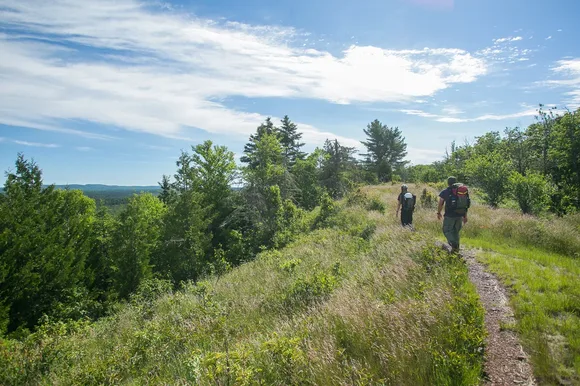
The Greenstone Ridge Trail runs 40 miles from one end of the island to the other, connecting backcountry campsites that fill on a first-come basis. Day hikers stick to shorter loops near Rock Harbor, like the Tobin Harbor Trail or Mount Franklin Trail, but even these feel empty compared to mainland parks. August is peak season here, with highs in the low 70s and mosquitoes finally retreating. If you've never done a multi-day backpacking trip, this is the place to learn: well-marked trails, shelters at campsites, and a scale that rewards ambition without punishing mistakes.
Voyageurs National Park
Four interconnected lakes forming a water maze / Boats replace roads across 340 square miles
Voyageurs flips the national park script: instead of parking and hiking, you launch a boat and navigate. The park protects a jigsaw of islands, bays, and channels across Rainy Lake, Kabetogama Lake, Namakan Lake, and Sand Point Lake. Most people have never heard of it, which is baffling given the boreal wilderness, world-class fishing, and houseboating culture that rivals anything in the Southwest's reservoir country.
You could spend a week exploring Voyageurs and never retrace the same paddle stroke twice.
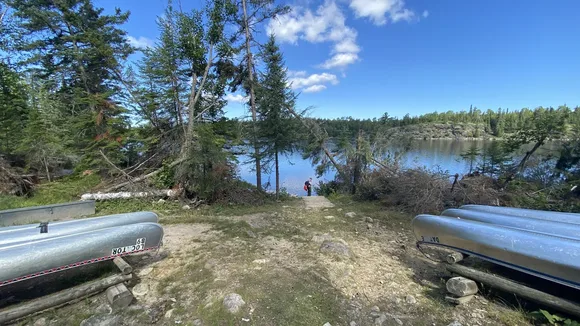
If you don't own a boat, rent a canoe or kayak from one of the outfitters in International Falls or Kabetogama and paddle to the park's boat-in campsites scattered across the lakes. Families gravitate toward the calmer bays and short portages, while serious paddlers tackle longer routes that string together island camps. The Kettle Falls area offers hiking trails and the historic Kettle Falls Hotel, accessible only by water. August brings warm days perfect for swimming off granite slabs, and the mosquitoes finally ease. Come prepared with maps, because GPS doesn't help much when every island looks identical.
Theodore Roosevelt National Park
Badlands that turned a politician into a conservationist / Wild bison roaming buttes and grassland
Theodore Roosevelt came to North Dakota in 1883 as a grieving New York assemblyman and left as a rancher convinced that wilderness shaped character. The park preserving his badlands ranch country spans three units: the popular South Unit near Medora, the remote North Unit along the Little Missouri River, and the even more remote Elkhorn Ranch site. Most visitors stick to the South Unit's scenic loop, where bison herds block traffic and prairie dog towns sprawl across the grassland.
Painted Canyon hits you before you even reach the entrance: layered buttes in shades of rust, cream, and charcoal stretching to a horizon that bends under the weight of sky.
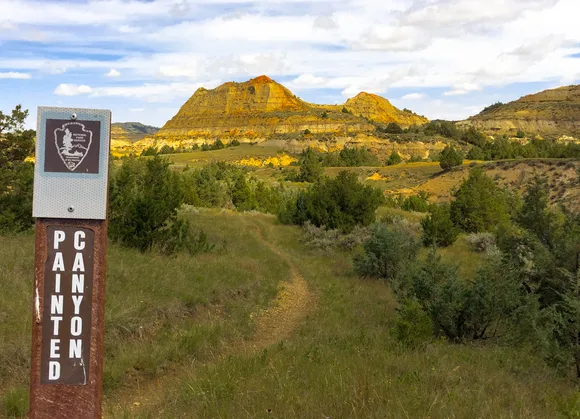
The Petrified Forest Loop takes you into backcountry few visitors see: 11.6 miles through juniper groves, across ridges, and past petrified wood scattered like ancient breadcrumbs. Kids do better on the shorter Painted Canyon Trail or Coal Vein Trail, where you can see the evidence of a coal seam that burned underground for decades. August brings heat that pushes into the upper 80s, but the air stays dry and the light turns golden by late afternoon. The North Unit sees a fraction of the South Unit's crowds and offers equally dramatic scenery if you're willing to drive the extra miles.
Badlands National Park
Fossil beds documenting 65 million years / Spires weathering into lunar-white formations
Badlands compresses geologic time into a vertical slice you can read like a book: ancient seabeds, tropical forests, and the bones of rhinoceroses that roamed South Dakota before the Rockies even existed. The Big Badlands Wall runs for miles along the park's northern boundary, a jagged ridge of eroded spires and pinnacles that glow pink at sunrise and white-hot by noon. The Door Trail and Notch Trail bring you into the formations on short hikes that feel like walking through a moonscape.
The Castle Trail stretches five miles across mixed-grass prairie where bison graze against a backdrop of crumbling spires.
August temperatures climb into the upper 80s and shade disappears entirely, so start early or save hiking for late afternoon. Kids love the Fossil Exhibit Trail, a boardwalk loop where replicas show what's still buried in the rock, and the Junior Ranger program here actually teaches geology in a way that sticks. The Sage Creek area offers backcountry camping with no permit required: just pick a spot at least a half-mile from the road and set up camp under stars so dense they blur into clouds. If you're driving cross-country on I-90, this is the park that justifies the detour. If you're already planning a South Dakota trip, pair it with Theodore Roosevelt and you've got a badlands double feature worth the drive.