The Rocky Mountain National Parks Road Trip
Six mountain parks stay open all winter and welcome families without specialized gear or backcountry skills
The mountain parks that define the Rockies share two uncommon traits: they're spectacular year-round destinations, and they're welcoming enough for families with young kids to tackle without specialized gear or backcountry experience. From the supervolcano plains of Yellowstone to the granite spires of the Tetons, these six parks stay open through winter and offer everything from boardwalk geyser tours to alpine lake loops that five-year-olds can handle.
April sits in an odd spot on the calendar. Too late for reliable winter sports, too early for Trail Ridge Road or Going-to-the-Sun Road to open. But if you're planning a Rocky Mountain road trip, this is when you'll find the sweet spot between skeletal winter crowds and summer's shoulder-to-shoulder parking lots.
Rocky Mountain National Park
More trail miles than most states have highways / Peak season starts in June
Denver sits close enough that you can leave the airport and reach the park's east entrance in under two hours. That proximity makes Rocky Mountain one of the busiest parks in the system, drawing more annual visitors than the population of Los Angeles. But April changes the equation. Trail Ridge Road remains closed until late May, which funnels most casual tourists elsewhere and leaves the lower-elevation trails surprisingly open. Bear Lake and Dream Lake see steady traffic, but push past to Emerald Lake and you'll find breathing room.
The park's 300 miles of trails absorb crowds better than you'd expect, as long as you're willing to walk past the first overlook.
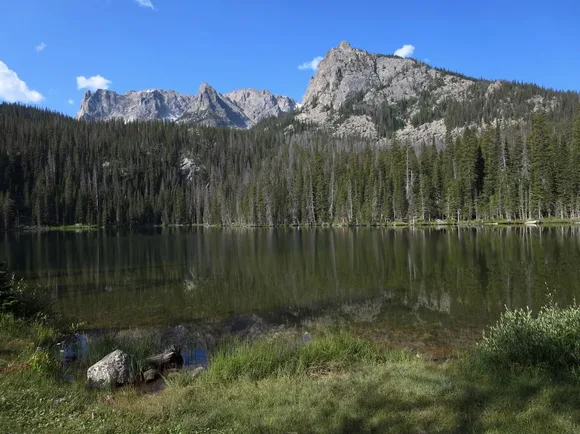
Elk congregate in the meadows along Moraine Park in April, and you'll spot them from your car without leaving the pavement. The lower trails around Bear Lake stay snow-free by mid-month, though you'll need traction devices for anything above 9,000 feet. Longs Peak remains a winter climb until June, but the easy loops around Sprague Lake and Bierstadt Lake give families enough scenery to justify the drive without the altitude headaches.
Yellowstone National Park
Larger than Delaware and Rhode Island combined / Bison herds cross roads on their own schedule
The world's first national park sprawls across three states and contains more trail miles than Yosemite, Zion, and Grand Canyon combined. That scale matters in April, when the park's sheer size absorbs what few visitors make the trip. Most roads open in mid-April, weather permitting, though the route from Tower-Roosevelt to Canyon stays closed until late May. You'll find Old Faithful and the Grand Prismatic overlook accessible, along with the Lower Loop roads that connect Mammoth Hot Springs to Norris Geyser Basin.
Half of Earth's geysers erupt here, and you can watch them from boardwalks built for strollers and wheelchairs.
Lamar Valley hosts the park's most reliable wildlife viewing, and April catches the tail end of wolf denning season before summer's tour buses arrive. Bison calves appear by late April, stumbling on wobbly legs while their mothers block traffic. The thermal features steam more dramatically in cool spring air, and you'll photograph Grand Prismatic without elbowing through crowds. Bring layers: April mornings hover near freezing while afternoons climb into the 50s.
Grand Teton National Park
Granite peaks rise 7,000 feet without foothills / Jackson Hole airport sits inside park boundaries
The Tetons skip the usual mountain preamble and punch straight into the sky from the valley floor. Thirteen peaks top 12,000 feet, and you'll see most of them from the Jenny Lake parking lot. The park draws crowds that rival Rocky Mountain's, but April arrives before the summer rush. Snow lingers on the higher trails, but the valley floor paths around Jenny Lake and String Lake stay clear by mid-month. The Laurance Rockefeller Preserve offers quieter loops through aspen groves, with interpretive exhibits designed for families.
You can photograph the Tetons from your car at Schwabacher Landing, but the light gets better if you're willing to wade through wet meadows at sunrise.
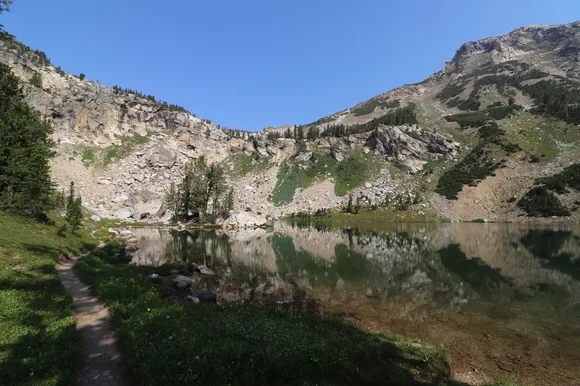
Moose frequent the willow flats near Moose Junction, and you'll spot them browsing in shallow ponds throughout April. The Snake River stays too cold and high for safe kayaking, but the overlooks along Teton Park Road provide enough scenery that kids won't complain about staying in the car. Jackson sits eight miles south, offering brewery tours and art galleries when weather chases you off the trails.
Glacier National Park
Twenty-six glaciers remain from 150 / Going-to-the-Sun Road doesn't open until June
Going-to-the-Sun Road defines most visitors' experience of Glacier, which makes April an odd time to visit. The road stays closed through May while crews clear snow that drifts 80 feet deep at Logan Pass. But if you can accept that limitation, you'll find a different park. The lower valleys stay accessible, and trails around Lake McDonald and the Apgar area offer flat, family-friendly loops through old-growth cedars. The Many Glacier area opens by late April, giving access to Swiftcurrent Lake and the Grinnell Glacier trailhead.
The glaciers that carved these valleys continue to retreat, losing mass every year that scientists measure them.
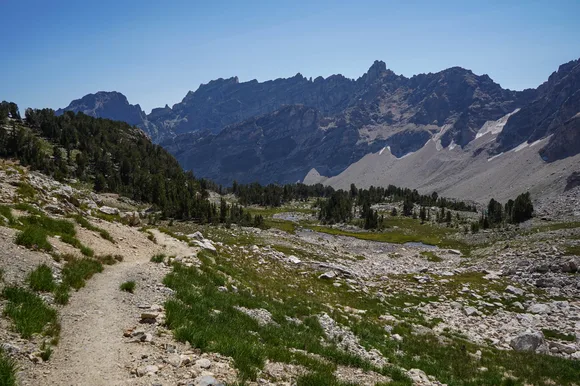
Wildlife viewing improves in April as grizzlies emerge from winter dens. The park requires bear spray on most trails, and rangers offer demonstrations at visitor centers. Avalanche Lake Trail stays snow-covered through mid-May, but the Trail of the Cedars boardwalk loop gives kids a taste of the park's old-growth forest without elevation gain. Waterfalls run heavy with snowmelt, and you'll hear them before you see them.
Black Canyon of the Gunnison National Park
Walls plunge 2,000 feet to the Gunnison River / Most people have never heard of it
The steepest gorge in North America doesn't generate the crowds that Rocky Mountain or Yellowstone attract, which makes it one of the more underrated parks in the system. The canyon walls drop so steeply that sunlight reaches the river bottom for only 33 minutes per day in the narrowest sections. You'll drive South Rim Road in under an hour, stopping at a dozen overlooks that peer straight down into the abyss. The Gunnison River carved through 1.7-billion-year-old Precambrian rock, exposing some of the oldest visible stone in North America.
The canyon's darkness comes from the rock's depth and the walls' steepness, not from any trick of geology or time of day.
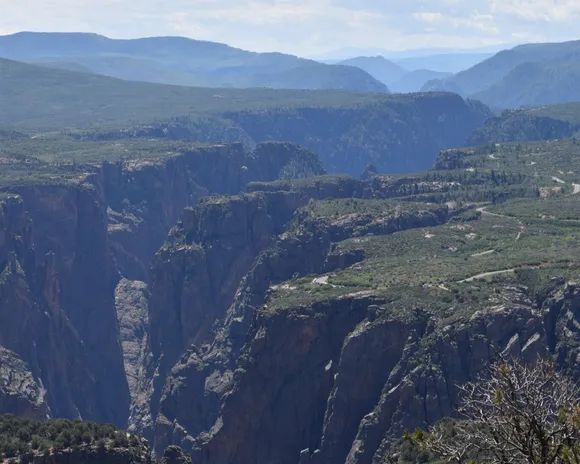
Warner Point Trail follows the rim for less than three miles round-trip, offering views that rival anything in the more famous parks without the elevation gain that exhausts kids. Chasm View and Painted Wall Overlook require only short walks from parking areas, making them accessible for strollers and wheelchairs. Rock climbers tackle the north wall's vertical routes, but most visitors stay on the rim. April brings mild temperatures in the 60s, perfect for hiking before summer's heat settles into the canyon.
Great Sand Dunes National Park & Preserve
North America's tallest sand dunes rise 750 feet / Alpine lakes at 13,000 feet sit behind the dunes
The tallest dunes in North America don't look real until you're standing at the base, craning your neck at a wall of sand that blocks out the Sangre de Cristo Mountains behind it. Most visitors stick to the first ridge, a 20-minute slog through ankle-deep sand, but if you push past Star Dune, you'll find solitude that feels almost impossible for a national park. The dunes cover roughly 30 square miles, larger than Manhattan, and they're still growing as prevailing winds push sand from the San Luis Valley against the mountain barrier.
You don't hike Great Sand Dunes so much as surrender to them — every step forward slides you half a step back.
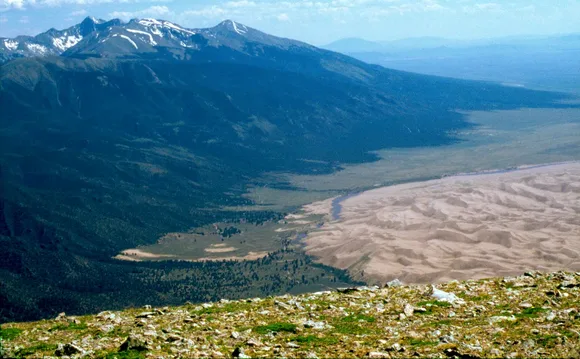
Medano Creek typically starts flowing in late April as snowmelt from the Sangres reaches the valley floor. By late May through June, the creek creates a shallow beach along the dune field's edge, where kids splash through surge flows while adults watch the mountains turn pink at sunset. The High Dune Trail gains 700 feet in 1.5 miles, manageable for families with elementary-age kids who can handle soft sand. Behind the dunes, the park preserves alpine tundra and wetlands, but April keeps those areas snow-covered and largely inaccessible.