Wildfire closes sections of Everglades National Park along Tamiami Trail
Wildfire closes Tamiami Trail sections of Everglades, but most trails and waterways remain open through shoulder season
A wildfire burning along the Tamiami Trail has closed sections of Everglades National Park during what should be the park's shoulder season between winter peak and the summer rains. The closure affects one of the few roads that bisects the park's northern boundary, cutting off access to Shark Valley and portions of the Big Cypress scenic loop at a time when temperatures still hover in the comfortable eighties and mosquitoes haven't yet reached their biblical summer swarms.
The timing hits harder than it looks on paper. May sits in that narrow window when most visitors have already left but the park remains genuinely accessible. Come June, the heat and humidity turn oppressive enough to make even the shortest boardwalk feel like endurance training. Right now, you could still bike the Shark Valley Loop without melting into the pavement.
Everglades National Park
America's largest subtropical wilderness / Closer to Miami than Disney
The Everglades doesn't announce itself the way mountain parks do. You won't round a corner and gasp at a granite cliff face. Instead, you'll find yourself staring at what looks like an endless wet prairie punctuated by hardwood hammocks and mangrove islands, trying to spot the alligators that outnumber the tourists on most trails. The Anhinga Trail delivers on that front better than almost anywhere else in the country. Walk the boardwalk at dawn and you'll see gators so close you could count their teeth, along with herons, egrets, and the namesake anhingas drying their wings in poses that look like they're auditioning for a nature documentary.
The River of Grass moves so slowly you can't see it flow, but everything here lives or dies by its rhythm.
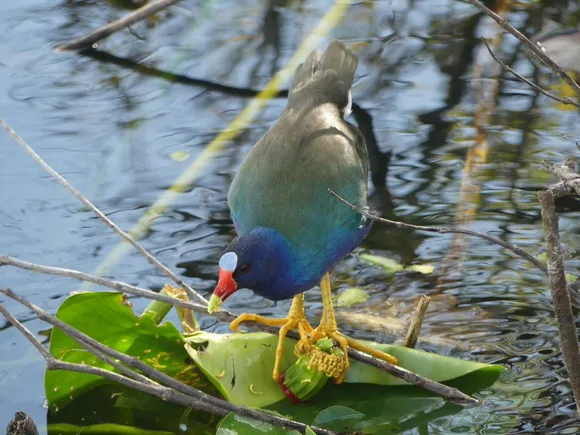
The wildfire closure affects the Tamiami Trail corridor, which means Shark Valley and its fifteen-mile paved loop are currently off limits. That's a significant loss. The loop offers the flattest, most accessible way to see the park's interior without slogging through sawgrass, and the observation tower at the halfway point gives you the only elevated view of the River of Grass for miles in any direction. Tram tours run the loop for visitors who don't want to bike or walk the full distance, but those are suspended until the National Park Service reopens the area.
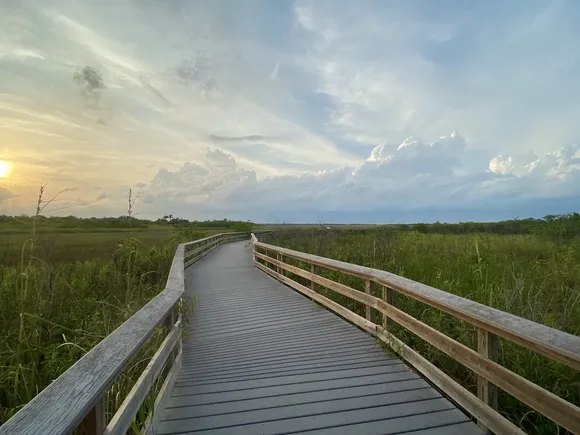
The rest of the park remains open, and that includes the trails most people visit anyway. Royal Palm is still accessible from the Ernest Coe Visitor Center entrance, which puts you within minutes of both the Anhinga Trail and the Gumbo Limbo Trail. The latter takes you through a hardwood hammock where the canopy actually provides shade, a rarity in a landscape defined by open water and sawgrass. If you're planning to kayak or canoe, the Ten Thousand Islands region along the Gulf Coast stays unaffected by the closure. Launch from Flamingo or Gulf Coast and you'll paddle through mangrove tunnels where the only sound is your paddle breaking the surface.
The fire itself isn't unusual for May in South Florida. This is the dry season, when controlled burns are common and wildfires flare up in the sawgrass and pinelands. What makes this closure noteworthy is the location along one of the park's primary access corridors. The Tamiami Trail connects Miami to Naples and serves as the main northern boundary of the park. When that road closes, it doesn't just shut down park access. It forces through traffic onto alternative routes that add significant driving time.
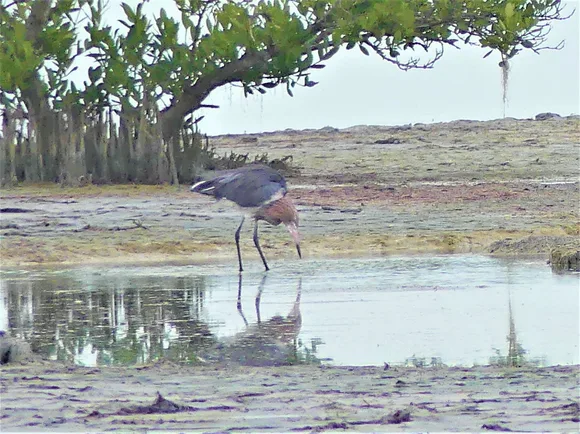
If you had plans to visit Everglades in May and haven't left yet, you can still salvage the trip. Focus on the main park road from Homestead to Flamingo, which remains fully open. That route gives you access to the Anhinga Trail, the Pa-hay-okee boardwalk overlooking the sawgrass prairie, and the Mahogany Hammock trail through one of the park's densest hardwood stands. At Flamingo, you can rent kayaks or canoes and explore Florida Bay, though be warned that the no-see-ums can be vicious even in May. The Coastal Prairie Trail and other backcountry routes near Flamingo stay open, offering hiking that feels genuinely remote despite being an hour from suburban sprawl.
The park draws fewer visitors than you'd expect for a site this close to Miami. Crowds stay manageable even during the February peak, and by May most tourists have moved on to summer destinations farther north. That means you're more likely to have the boardwalks to yourself, assuming you visit early or late in the day. Midday heat in May pushes into the high eighties with humidity that makes the air feel thick enough to chew, so plan your walking for dawn or the hour before sunset when the light turns the sawgrass gold and the wildlife becomes more active.
The National Park Service hasn't announced a timeline for reopening the Tamiami Trail sections, which is standard practice for wildfire closures. The fire needs to be fully contained and any damaged infrastructure repaired before they'll lift restrictions. Check the park's official website or call the main visitor center before you drive down. Road closures can extend for days or weeks depending on conditions, and the last thing you want is to arrive at a gate with a closed sign and no backup plan.
For visitors who can't or won't shift their plans to the southern sections of the park, consider pushing your trip into November or December. That's when the Everglades hits its sweet spot: temperatures in the seventies, lower humidity, minimal rain, and wildlife concentrated around shrinking water sources where you can't miss them. The park becomes what the brochures promise it will be, and you won't be fighting summer heat or winter crowds to experience it.