The 8 Biggest National Parks in America
Alaska holds five of America's eight largest parks, where square mileage rivals entire states and visitors number in the thousands
When people think "biggest national parks," they usually imagine Yellowstone. But the world's first national park barely cracks the top ten. Alaska holds the real giants, where park boundaries stretch wider than entire states and visitors number in the thousands rather than millions. Size matters here because it determines everything from access to solitude. These eight parks measure larger than Connecticut, and most Americans have never heard of half of them.
April sits outside peak season for most of these parks, but that timeline works differently when you're dealing with landscapes this remote. The Alaska parks remain snowbound and largely inaccessible. Death Valley and Yellowstone, however, hit their stride, offering cooler temperatures and fewer crowds than summer brings.
Gates of the Arctic National Park & Preserve
Larger than Switzerland / Fewer visitors than a small-town high school graduation
Gates of the Arctic sprawls across territory bigger than Maryland and Delaware combined, making it America's second-largest national park. The name sounds poetic until you realize it's literal: the Brooks Range rises in twin peaks that form a natural gateway to the Arctic. No roads cross the boundary. No trails mark the tundra. Most visitors fly in on bush planes and drop into valleys where caribou migrations follow routes older than written history.
This is the park that makes experienced backpackers reconsider whether they're actually experienced.
July offers the only real window for access, with temperatures climbing into the low sixties and twenty-hour daylight stretching your hiking range. But even in summer, you're navigating by compass and topographic instinct through terrain where grizzlies outnumber people by margins no one has accurately counted. The Noatak River cuts through the western section, offering a more manageable entry point for paddlers willing to commit to week-long expeditions.
Wrangell-St. Elias National Park & Preserve
Larger than Yellowstone and Yosemite combined / Nine of the continent's sixteen highest peaks
The largest national park in America holds enough square mileage to swallow six Yellowstones. Wrangell-St. Elias absorbs the collision zone where three mountain ranges converge, creating a landscape of glaciers larger than Rhode Island and peaks that punch through fourteen thousand feet. Unlike Gates of the Arctic, you can drive here. The McCarthy Road runs sixty miles of washboard gravel to the old mining town of McCarthy, where fewer than fifty year-round residents live beneath mountains that look Himalayan.
Most parks hide their best features behind miles of trail, but here you can walk onto the Root Glacier without breaking a sweat.
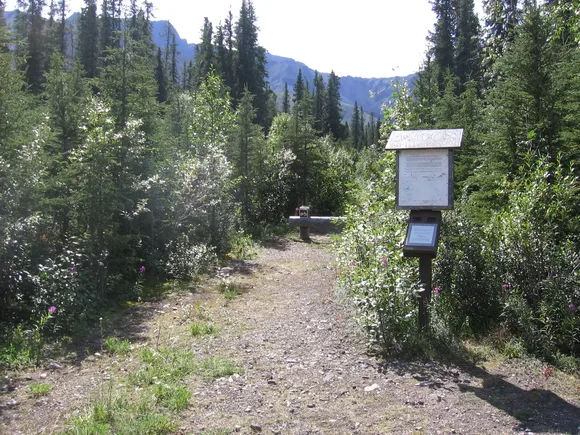
The Bagley Icefield sprawls across the park's southeastern corner, feeding glaciers that calve into coastal fjords you can kayak if you're ambitious enough to reach them. Copper mining built McCarthy and Kennicott a century ago, and the abandoned mill buildings still lean against the mountainside, slowly surrendering to gravity. June brings the mildest weather and longest light, though the park stays uncrowded enough that even July feels empty.
Denali National Park & Preserve
North America's tallest peak / One road stretching ninety miles into the backcountry
Denali covers an area larger than New Hampshire, but most visitors experience only the first fifteen miles along the park road. That single road provides the genius of Denali's design: private vehicles stop at Mile 15, and shuttle buses carry you deeper into territory where grizzlies, caribou, and Dall sheep treat the tundra like their private estate. The mountain itself hides behind clouds two-thirds of summer, but when Denali clears, it dominates the northern horizon like nothing else on the continent.
You don't come to Denali to summit the peak; you come to watch wildlife ignore you while mountains watch everything.
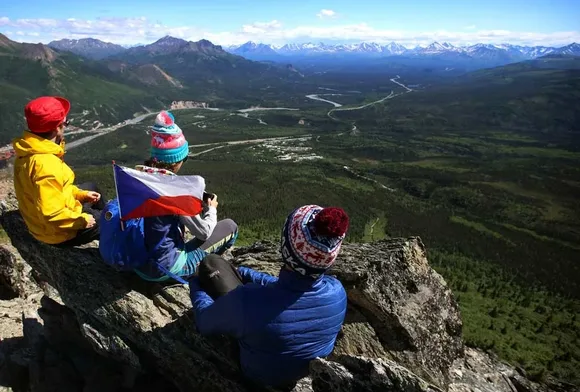
The park's backcountry operates on a zone system that limits human density to levels where you might hike for days without seeing another person. Frontcountry trails like Mount Healy Overlook climb through alpine tundra to views that stretch across the Alaska Range, and the Savage River Loop offers an easy walk that kids can manage. Wonder Lake sits at Mile 85, reflecting the mountain on clear mornings with the kind of symmetry that looks Photoshopped.
Katmai National Park & Preserve
North America's largest brown bear population / Brooks Falls during the salmon run
Katmai stretches across an area larger than Connecticut, but most visitors see only Brooks Falls, where brown bears crowd the river to catch salmon mid-leap. The park protects a watershed that concentrates the continent's highest density of brown bears, with the population topping two thousand across volcanic valleys and coastal estuaries. The Valley of Ten Thousand Smokes memorializes the 1912 Novarupta eruption that buried forty square miles under ash deeper than a seven-story building.
Brooks Falls turns wildlife viewing into a spectator sport, with bears so focused on salmon they barely register the cameras clicking from elevated platforms.
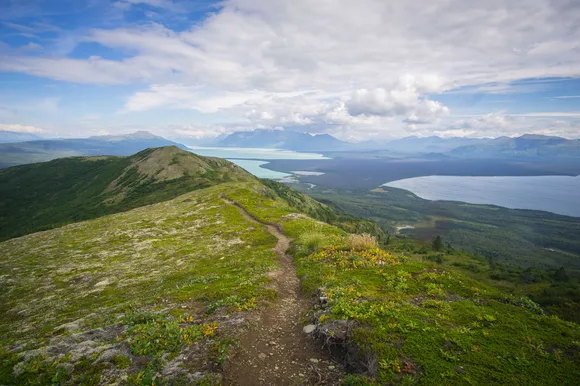
You reach Katmai by floatplane from King Salmon, landing on Naknek Lake near Brooks Camp. July brings peak bear activity as sockeye salmon fight upstream, and the elevated viewing platforms let kids watch from safe distances while rangers explain bear behavior in real time. The backcountry opens up for paddlers willing to navigate coastlines where bears fish the tidal flats, but most visitors stay within a mile of Brooks Camp.
Lake Clark National Park & Preserve
Forty-two-mile turquoise lake beneath two active volcanoes / No roads
Lake Clark sits just across Cook Inlet from Anchorage, but you can't drive here. Floatplanes carry you over the Chigmit Mountains to a park larger than Delaware, where Mount Redoubt and Mount Iliamna steam above glacial valleys and salmon streams that bears fish without interruption. The lake itself runs forty-two miles through country that shifts from coastal rainforest to alpine tundra within hours of hiking.
Lake Clark feels like Alaska before tourism boards discovered it.
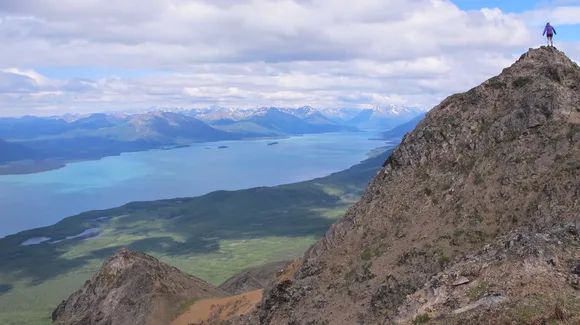
The park hosts fewer visitors annually than Yellowstone sees in a single summer day, which means the backcountry stays genuinely wild. Twin Lakes anchor the western section, offering paddling routes through country where the Brooks Range transitions to coastal mountains. The Tlikakila River cuts through the heart of the park, drawing rafters to Class III rapids through canyons the Dall sheep claim as territory.
Death Valley National Park
Larger than Connecticut / Hottest temperature ever reliably recorded
Death Valley sprawls across territory that could swallow Yellowstone, making it the largest national park outside Alaska. Badwater Basin drops to the lowest point in North America, where salt flats crack into geometric patterns beneath mountains that rise more than eleven thousand feet. The Racetrack Playa holds boulders that slide across dried mud, leaving tracks that scientists couldn't explain until 2014.
Death Valley punishes summer visitors and rewards winter explorers with temperatures that make hiking pleasant and wildflower blooms that carpet the valleys.
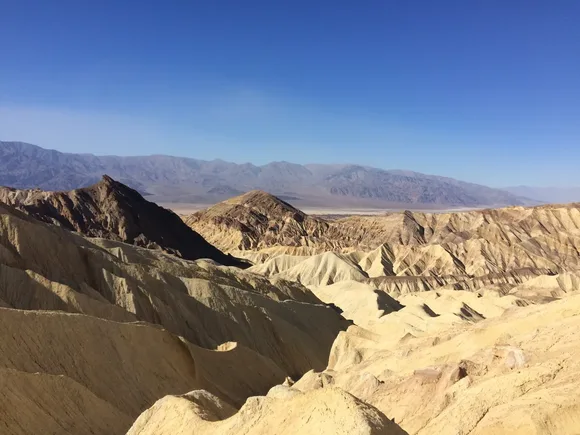
April sits at the tail end of wildflower season, when desert gold and gravel ghost still color the washes if winter rains were generous. The Mesquite Flat Sand Dunes rise near Stovepipe Wells, offering the closest thing to Saharan scenery without leaving California. Zabriskie Point catches sunrise over badlands that fold into waves of oxidized sediment, and the Golden Canyon Trail drops you into slot canyons narrow enough to touch both walls.
Yellowstone National Park
Larger than Rhode Island and Delaware combined / Half the world's geysers
Yellowstone claims enough acreage to contain all of Yosemite with room left over, making it the largest national park in the Lower 48 outside California. The park sits on a supervolcano that powers more than ten thousand geothermal features, from Old Faithful's predictable eruptions to the kaleidoscope bacteria rings of Grand Prismatic Spring. Bison herds number around five thousand, and they treat the park roads like their own personal highway system.
Yellowstone invented the national park concept in 1872, and it still draws more visitors than Los Angeles has residents.
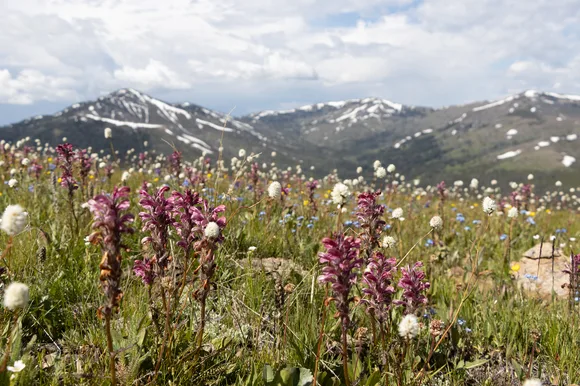
April brings unpredictable weather and limited road access, with the interior roads staying closed until late in the month. But by late April, you'll catch the park between winter closure and summer crowds, when bison calves wobble after their mothers and Lamar Valley shows off wolves at dawn. The Grand Canyon of the Yellowstone cuts through rhyolite cliffs in colors that shift from yellow to orange depending on the light, and the South Rim Trail delivers views down to the Lower Falls without the shoulder-to-shoulder crowds of July.
Glacier Bay National Park & Preserve
Fifteen tidewater glaciers / Reachable only by boat or plane
Glacier Bay covers an area larger than Delaware, protecting a fjord system where glaciers calve icebergs the size of houses into water that humpback whales patrol. The bay itself didn't exist two centuries ago: it was solid ice until the glaciers retreated faster than almost anywhere else on Earth. Now cruise ships and tour boats navigate sixty-five miles of channels where seals haul out on ice floes and brown bears fish the shoreline.
Glacier Bay teaches glacier dynamics in real time, with ice faces collapsing into the water while you watch from a kayak.
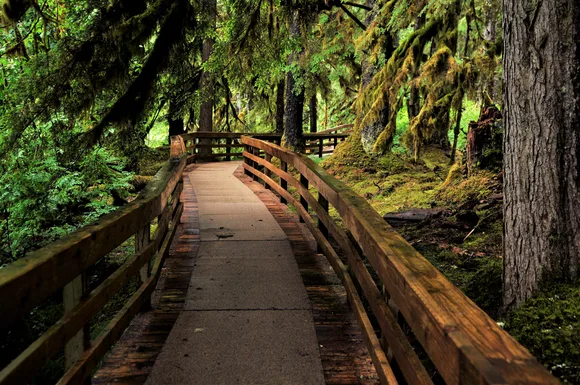
Most visitors experience the park from boat decks, but Bartlett Cove offers the only developed area with trails through temperate rainforest where Sitka spruce grow taller than fifteen-story buildings. The Forest Loop Trail runs just over a mile through moss-draped forest that feels transported from Middle Earth, and rangers lead daily walks explaining how the landscape recovered after the ice retreated. June brings calmer seas and migrating whales, though July draws more cruise ships.